skip to content

General Ecology - Prof. Dr. P. Fink

Research

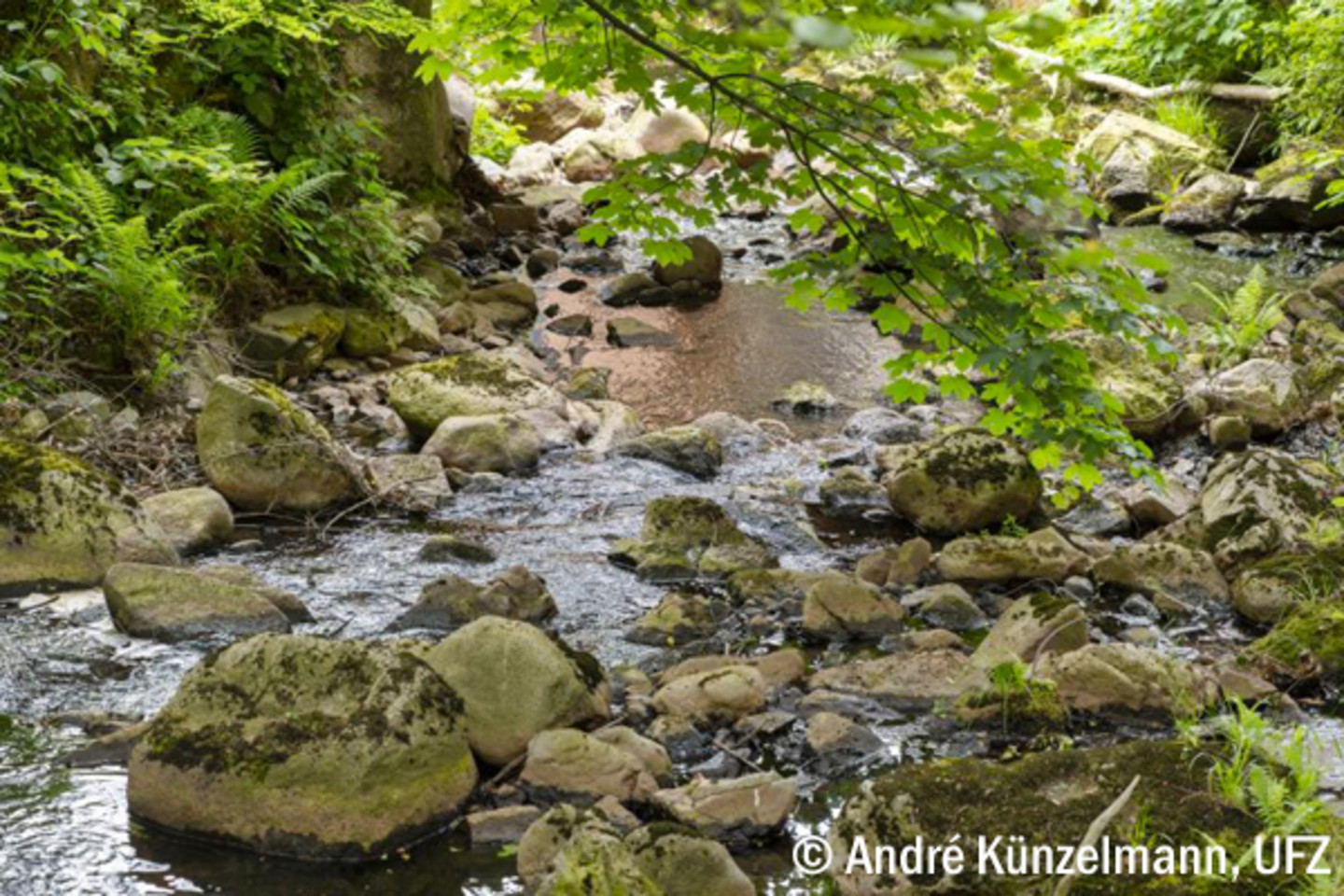
©André Künzelmann

The ongoing global biodiversity and climate crises impact aquatic ecosystems and the multiple ecosystem functions related to them. Experimental approaches with a rigorous, mechanism-oriented focus, are essential to understand both the consequences and possible mitigation strategies for those urgent problems. This is the focus of our current research in the workgroup for General Ecology. Making use of the University of Cologne’s unique research infrastructure, namely the Ecological Rhine Station in Cologne and the Ecological Field Station Rees at the Lower Rhine, we perform experimental, process-oriented research in animal and ecosystem ecology. We cover a wide range of (mostly aquatic) habitats, from small streams, large rivers, and lakes to the coastal oceans with a particular focus on the following research themes:


1. Experimental stream ecology: 

Running water ecosystems and the organisms therein are challenged by mulitple, simultaneously acting anthropogenic stressors. Understanding how those multiple stressors act directly and indirectly on aquatic organisms and their fitness requires controlled experimental studies. Such experiments allow disentangling individual stressors and their combinations in different intensities to investigate the hierarchy and interactions of stressors on running water ecosystems and organisms. This is an essential prerequisite for an adaptive management of surface waters under continuously changing land use and climate.

2. Aquatic biodiversity and related ecosystem functions: 

The global biodiversity crisis is particularly visible in freshwater ecosystems. Multiple anthropogenic stressors (see above) affect the abundance, activity and biological diversity of aquatic organisms and the ecosystem functions associated with them. Methodological advances, e.g. in the fields of nucleic acid sequencing methods allow us to track changes in biological diversity beyond classical, morphology-based identification methods. It is further important to study which factors drive the ongoing loss of biodiversity and in particular how changes in diversity affect the functionality of aquatic ecosystems.

3. Ecology of chemical signals under global change: 

Our previous research highlighted the important role of chemical signalling compounds for the internal regulation of aquatic ecosystems. Furthermore, there is increasing evidence that communication via chemical cues can be disturbed by global change (temperature increases and CO2-dependent pH alterations). We study the fine-tuned chemical communication networks among aquatic (both marine and freshwater) organisms and how these may be impacted by ongoing global change processes.


Office Contact

Phone: +49-221-470-5666
E-Mail: office-ecology@uni-koeln.de